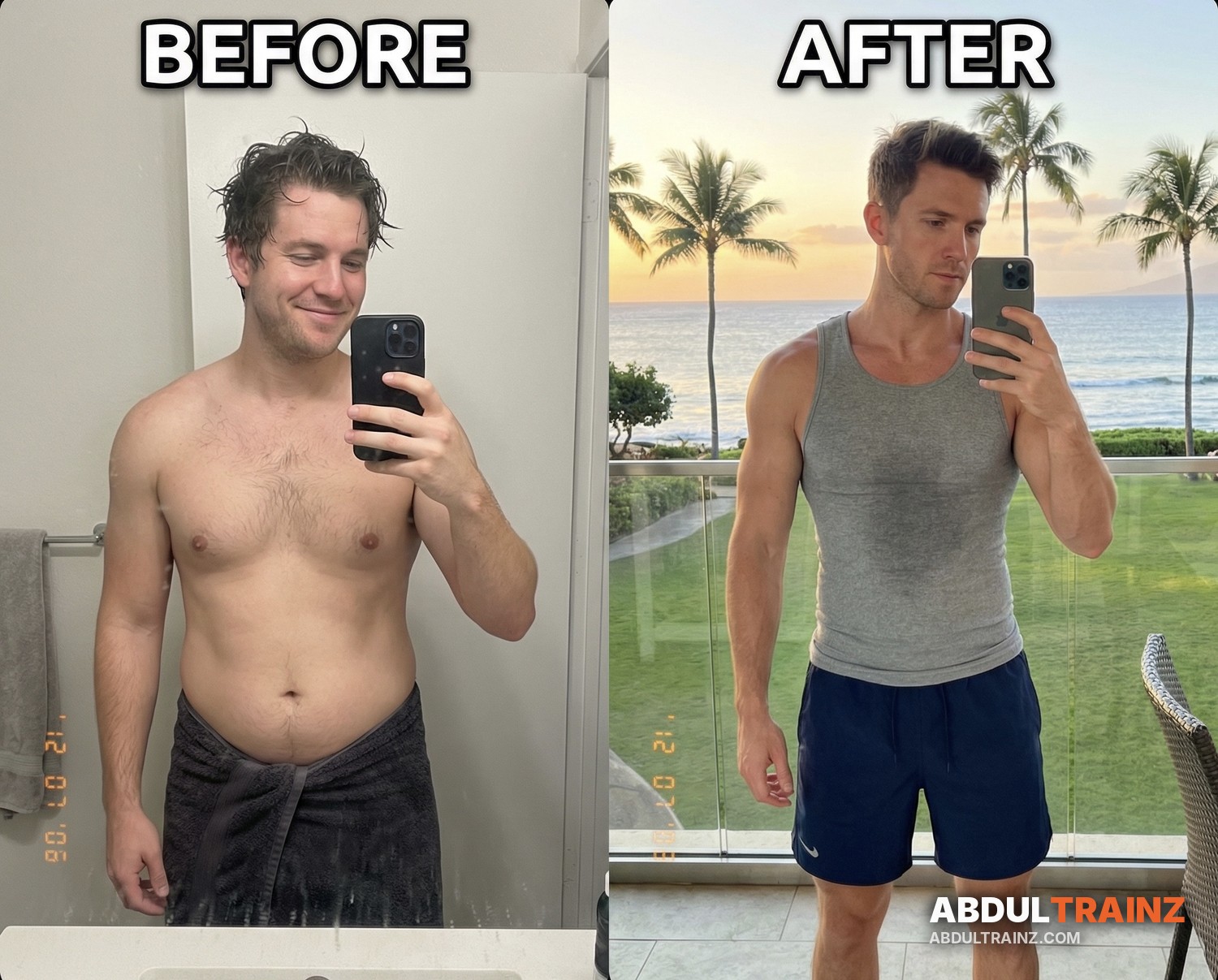
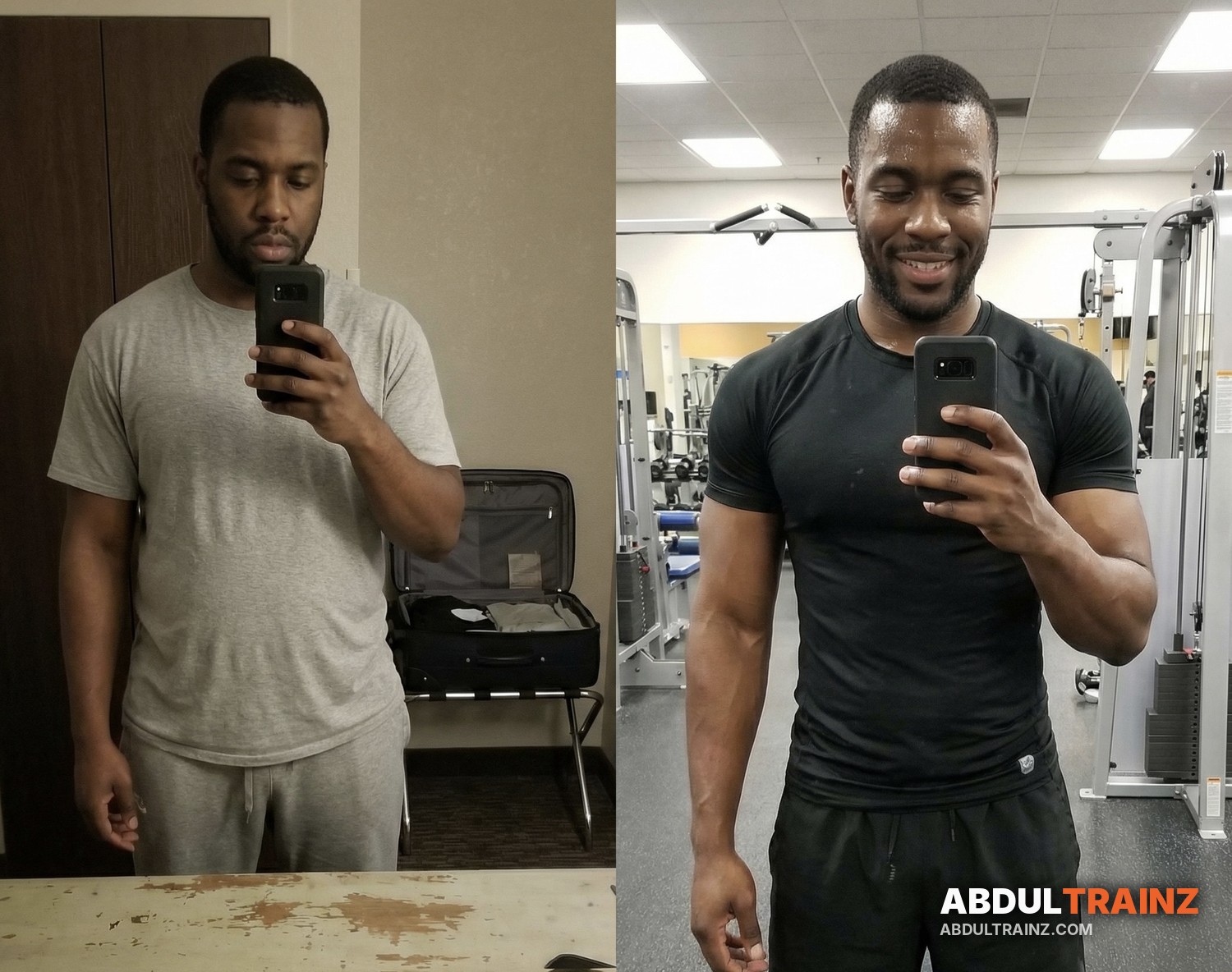
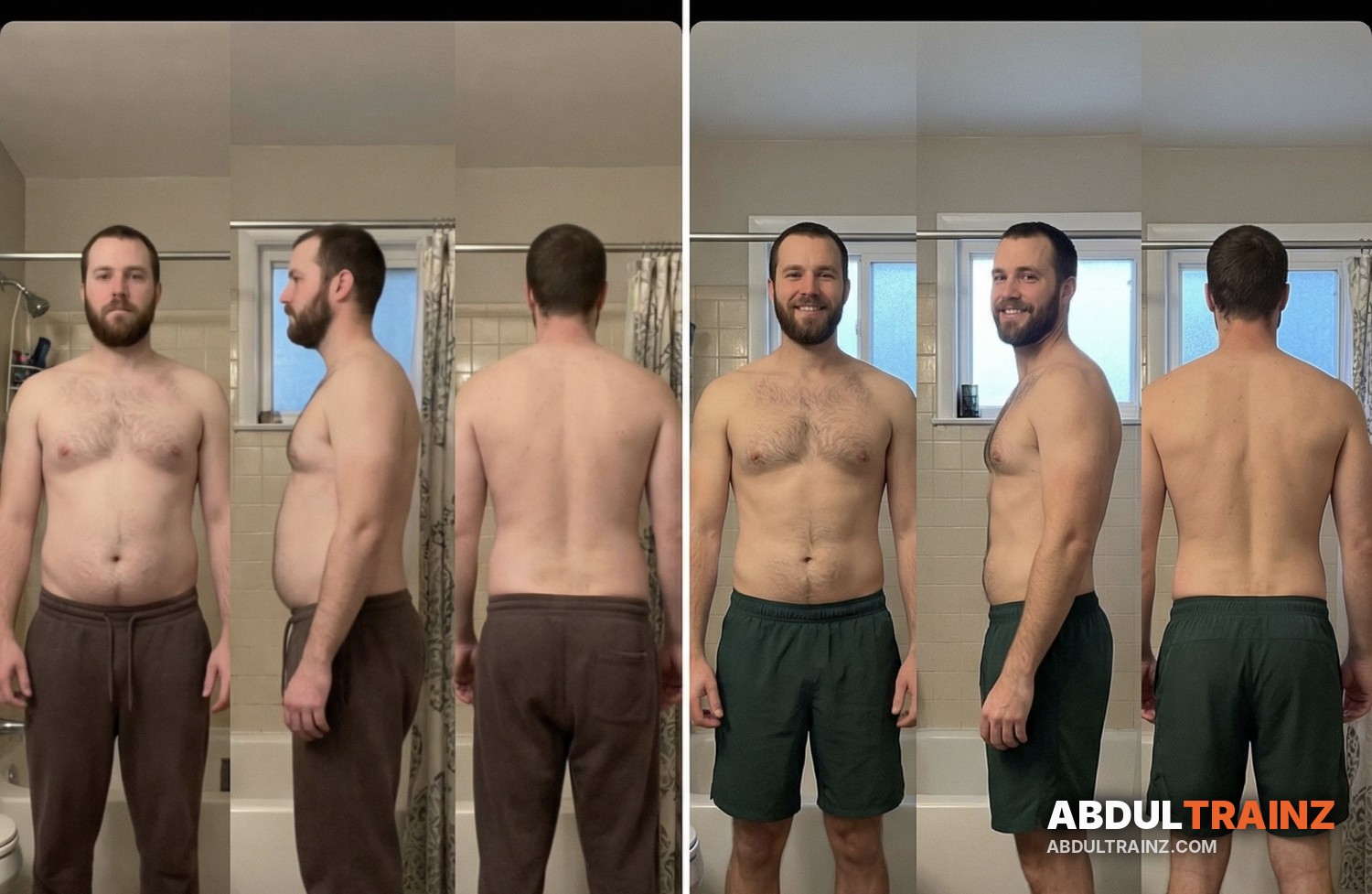
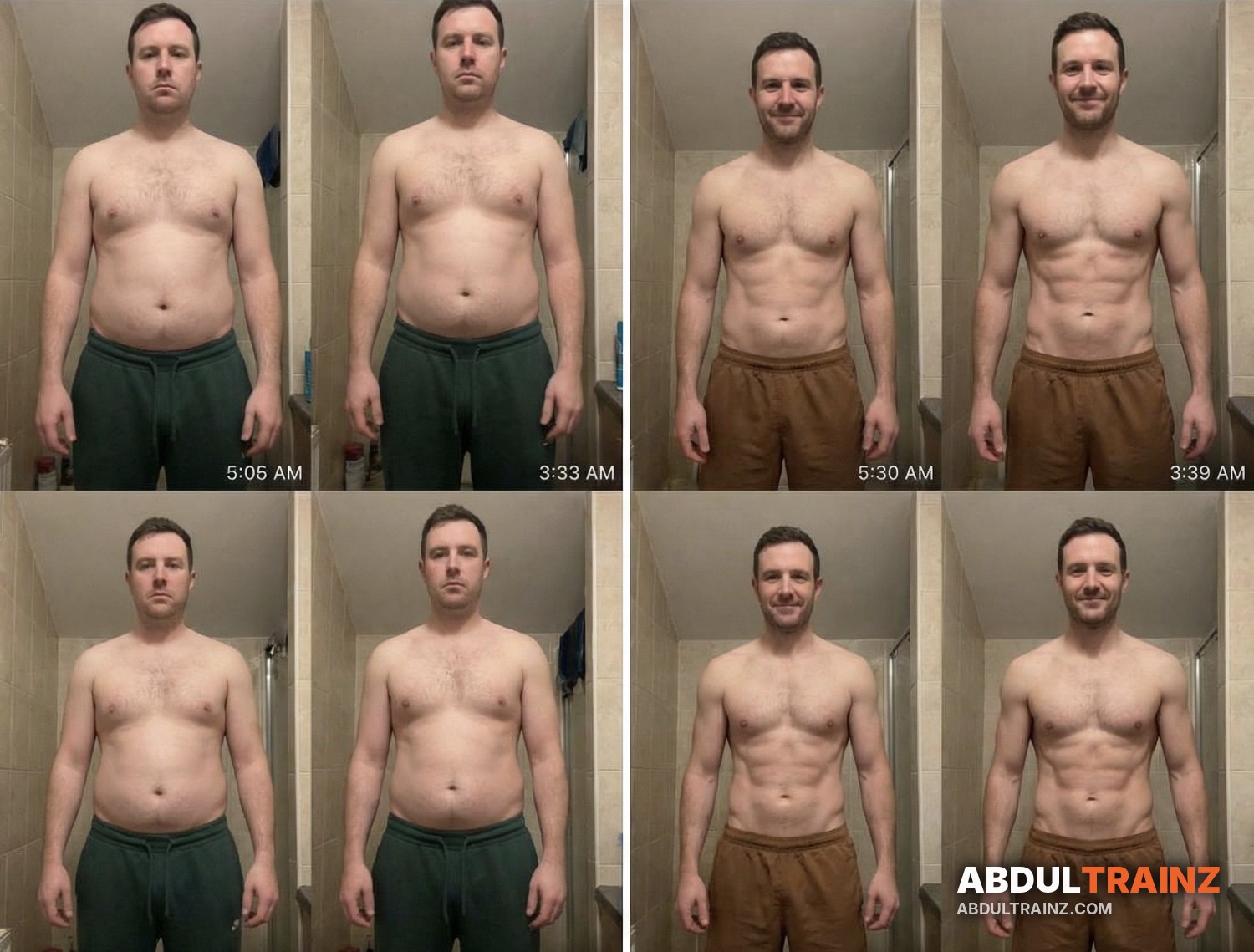
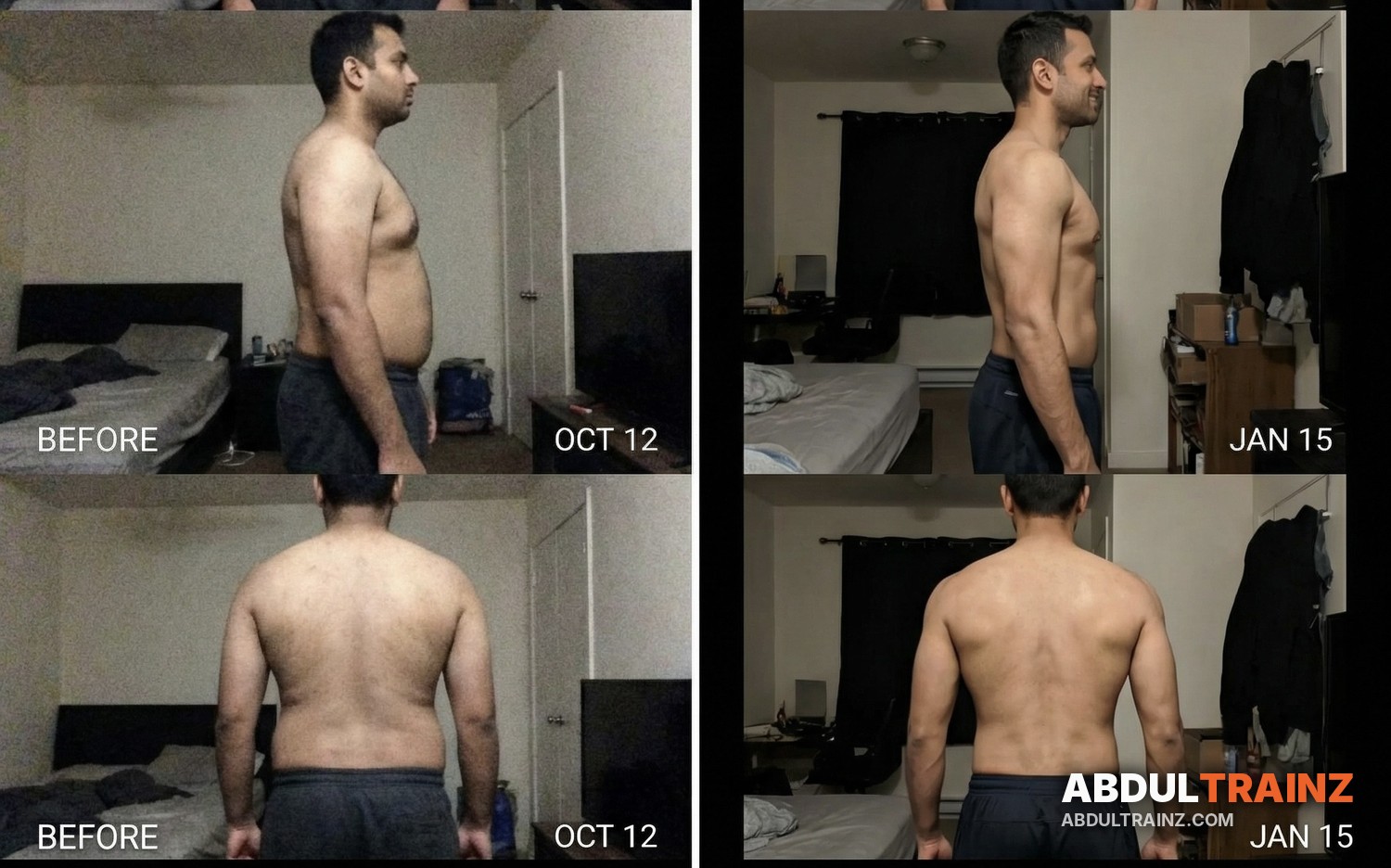
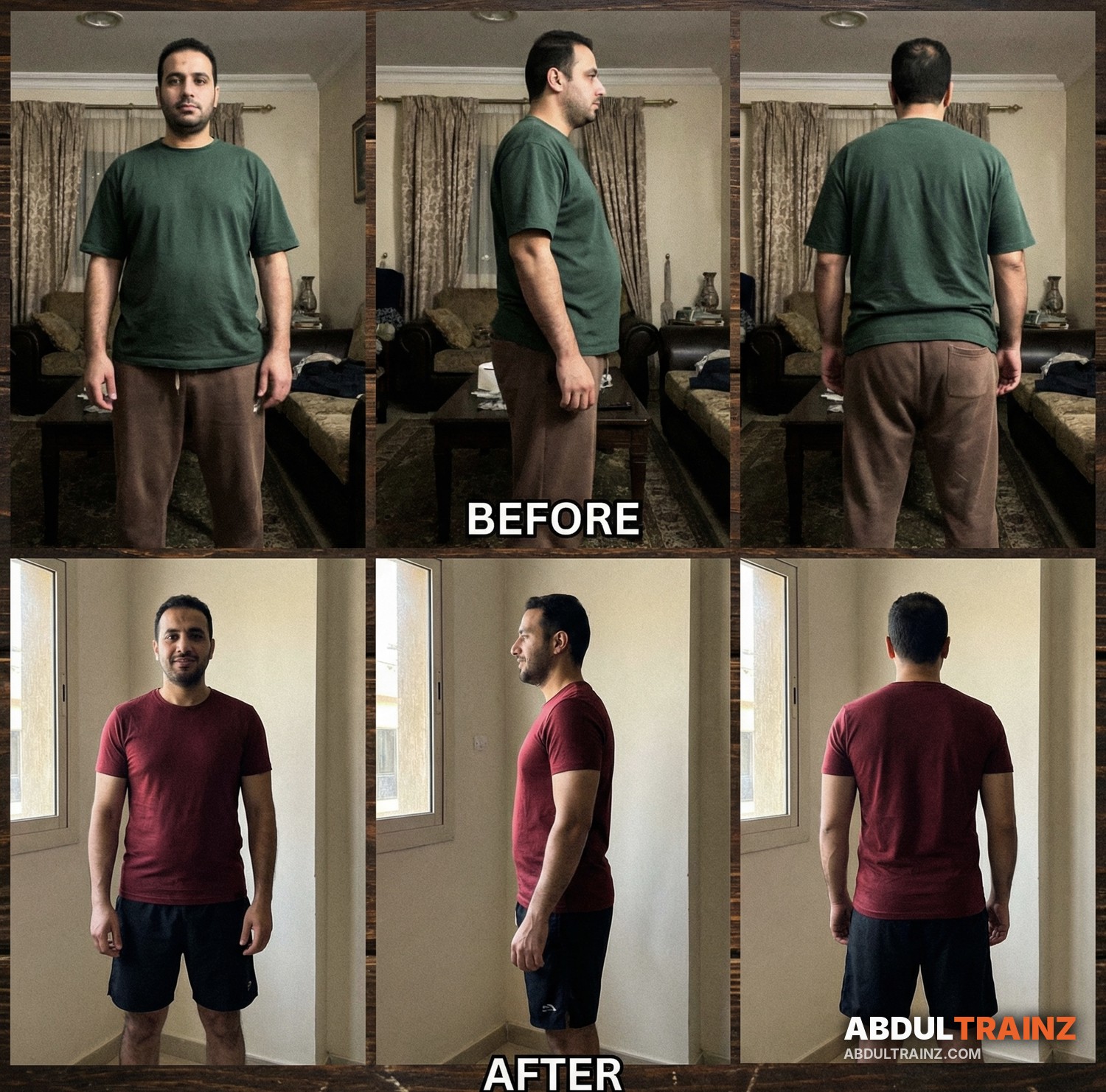
For adults past 30 who want to lose fat and build muscle without their knees, shoulders and lower back paying for it. Three sessions a week, built around the body you actually have.
No 5am starts. No meal prep containers. No training through pain and calling it discipline.
Not models. Not ten-week crash diets. Working people with jobs, kids and travel, training three times a week.
★★★★★“I used to go for a few weeks and then it would drop off before I'd pick it up again. Now if I've had a drop off, I'm back at it the next week. That's alright. I'm not gonna beat myself up over that.”
★★★★★“I'd written myself off. Abdul built everything around my travel instead of telling me to fix my travel. First plan I've ever actually finished.”
★★★★★“Three sessions a week and I'm in better shape than I was at thirty. I still go out, I still drink, I just know what I'm doing now.”
★★★★★“At 51 I thought it was too late. The energy came back first, the rest followed. Wish I'd done it ten years ago.”
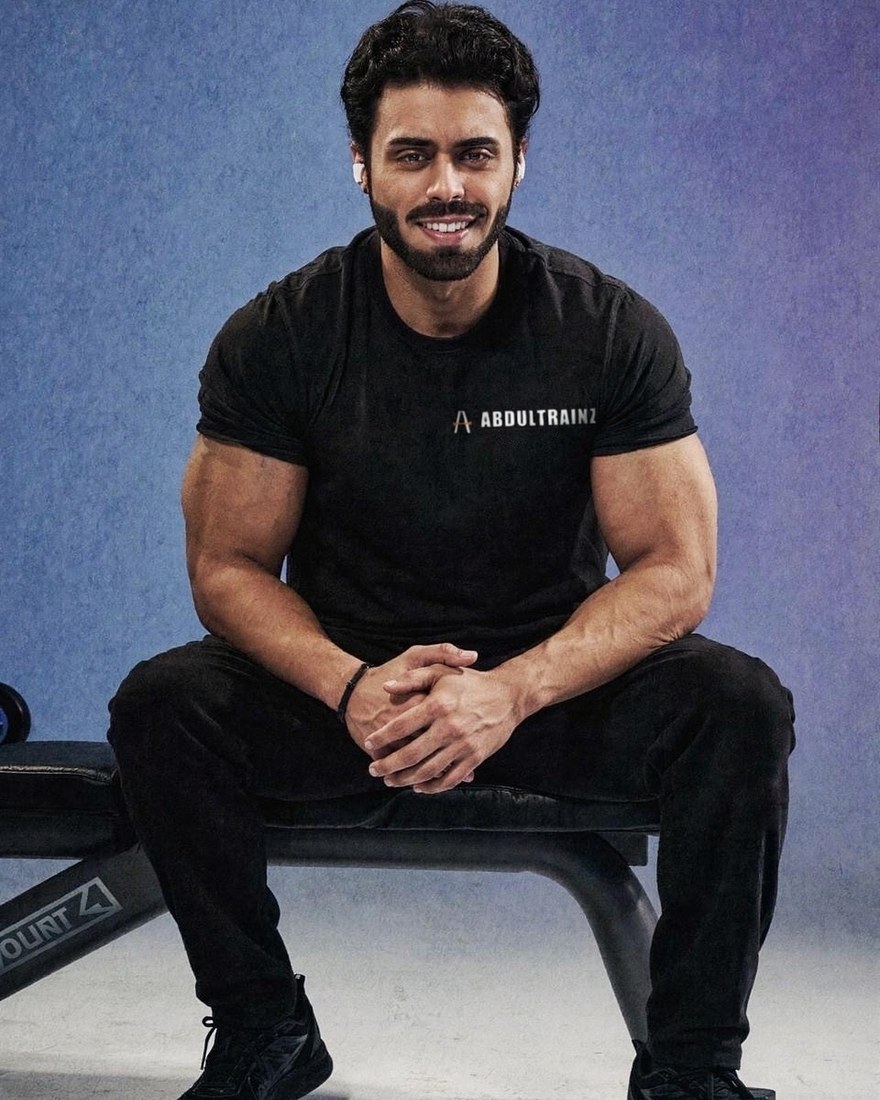
I've spent the last eight years coaching online, and I hold seven certifications across training, corrective exercise, performance and nutrition. That matters less than what it lets me see.
Most people past 30 don't quit because they lack discipline. They quit because something starts hurting. A knee on squats, a shoulder on pressing, a lower back that complains for two days after deadlifts. Then the sessions get skipped, then the week goes, then the whole thing.
Almost none of that is the exercise. It's how the exercise is being done. Where your feet are, how far you're going, which joint is actually taking the load. Change those and the same lift stops hurting, which is the entire reason I trained in corrective exercise and movement screening rather than just programming.
The other half is the week itself. I've run coaching businesses from the inside, not just my own, so I've seen where clients drop off. It's almost always week five, the first time real life collides with the plan. A work trip, a sick kid, a project that eats every evening.
So every plan I write has a bad-week version built in from day one. A hotel room session. A restaurant framework. A minimum that still counts. That isn't a nice extra. For someone with a real job, it's the whole job.
I keep the roster small on purpose. Every plan is built around one person's actual week, and every check-in gets a reply from me rather than a template or an assistant. Take on too many people and that stops being true, and then you're just paying for an app.
Fill in the form below. If it looks like a fit we get on a short call and I ask about your schedule, your travel, your injuries and what has already failed.
Training and nutrition built around the week you actually have. Straight into the app, with video on every exercise. Rebuilt every four weeks.
Weekly check-in, a video reply from me, and WhatsApp access when you are stuck at an airport or staring at a menu you do not recognise.
Run the plan for 90 days. If your waist hasn't moved and your lifts haven't gone up,
I coach you free until they do.
I turn people away most months. Better for both of us if you know now.
No. Most clients use one, but I've built plans around a set of dumbbells and a bench in a spare room. Tell me what you've got and I'll work with it.
It's the reason half my clients come to me. Hotel gym sessions, airport food, restaurant ordering and a bad-week minimum are built into the plan from the start, not bolted on when you panic.
Three sessions a week, 45 to 60 minutes. Plus a few minutes on Sunday for your check-in. That's it. If you can't find three hours a week, I'm not the right coach and I'll say so.
Usually, yes, and this is the part I am actually trained for. I hold NASM's Corrective Exercise qualification plus FMS and PRI, so we screen it on the first call and the programme gets built around it rather than despite it. If it needs a physio rather than a coach, I will tell you that instead of taking your money.
Almost never. In most cases it is foot position, depth, or which joint is taking the load, not the squat itself. Change those three and the same movement stops hurting. That is what I mean by biomechanics, and it is usually a five minute fix rather than a six week break.
No. Losing muscle year on year is what actually ages people, and lifting is the only thing on the menu that tells your body to keep it. What does change after 30 is that you need a proper warm up and a less reckless jump in weight. Both are arguments for coaching, not against lifting.
Energy and sleep usually shift in the first two or three weeks. Visible change takes longer, normally six to eight weeks before other people notice. Anyone promising faster than that is selling you something.
No. The method is the same either way. What changes is the obstacle we build around, and that's different for everyone regardless.
Takes about 90 seconds. I read every application myself. If it's a fit I'll come back to you within 24 hours with next steps. If it isn't, I'll tell you that honestly and point you somewhere better.